
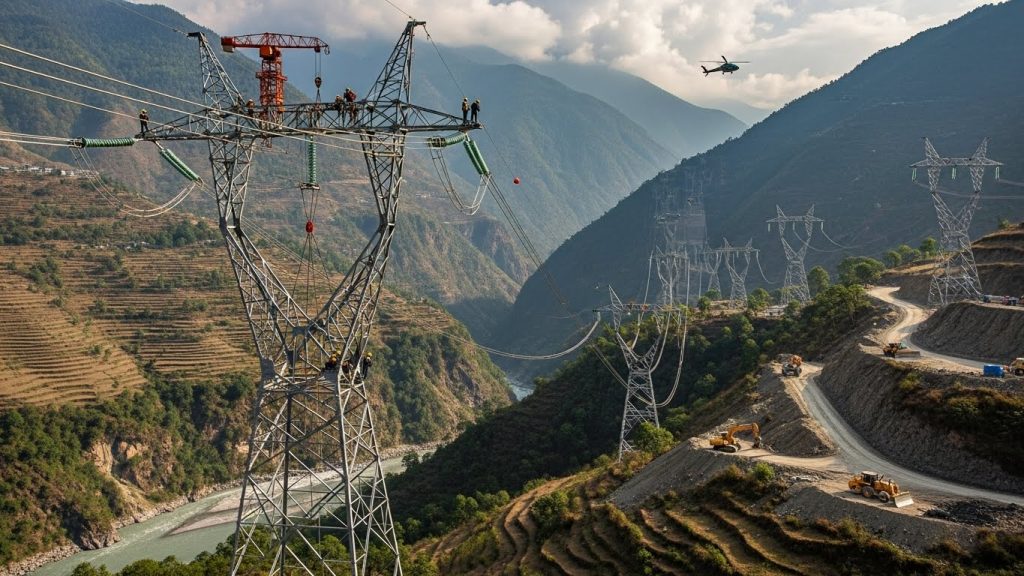
Nepal’s dream of becoming an energy-secure nation depends on more than just generating electricity. Building strong, reliable transmission infrastructure is what turns power generation into everyday reality for households, businesses, hospitals, schools, farms, and industries. Nepal’s terrain is beautiful but unforgiving. Mountains, deep valleys, monsoon weather, and remote settlements make transmission line construction one of the most complex civil and electrical engineering challenges in the country. Transmission lines link power plants to communities and connect different regions to a stable national grid. Without them, even the most successful hydropower project cannot deliver electricity where it is needed. In Nepal, the total high-voltage transmission network has expanded considerably in recent years, with stronger 132 kV, 220 kV and 400 kV links being built to carry energy across long distances efficiently and safely.
Transmission infrastructure does more than carry electrons. It enables economic growth by supporting factories, manufacturing units, service providers, and modern agricultural systems. Schools and hospitals with reliable electricity can function better, and entrepreneurs can plan with confidence instead of worrying whether the lights will flicker off. It plays a critical role in national development by helping reduce energy shortages and by facilitating regional energy trade with neighboring countries, which can benefit Nepal’s economy over time.
But building this infrastructure is not straightforward. Geographic challenges make remote accesses difficult, environmental conditions demand resilient design choices, and safe execution requires skilled teams who understand both the technical requirements and local realities. Nepal’s transmission sector has faced delays and hurdles, but progress continues as projects move forward across diverse landscapes. ResearchGate
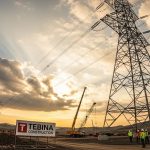
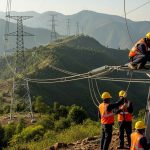
This is where Tebina’s work comes into focus. By focusing on transmission lines, tower and pole erection, conductor stringing, and substation connections with a commitment to quality, safety and sustainability, Tebina contributes to a stronger energy backbone for Nepal. Each project represents more than engineering and logistics. It demonstrates what is possible when technical expertise meets real-world problem solving on rugged terrain.
For Nepal to reach its potential as a regional power exporter and to ensure energy access for all communities, building and maintaining robust transmission infrastructure remains essential. Companies engaged in this mission help light homes, boost industries, and improve lives. As Nepal’s network expands and modernizes, advancing infrastructure projects will continue to be vital to the country’s future.