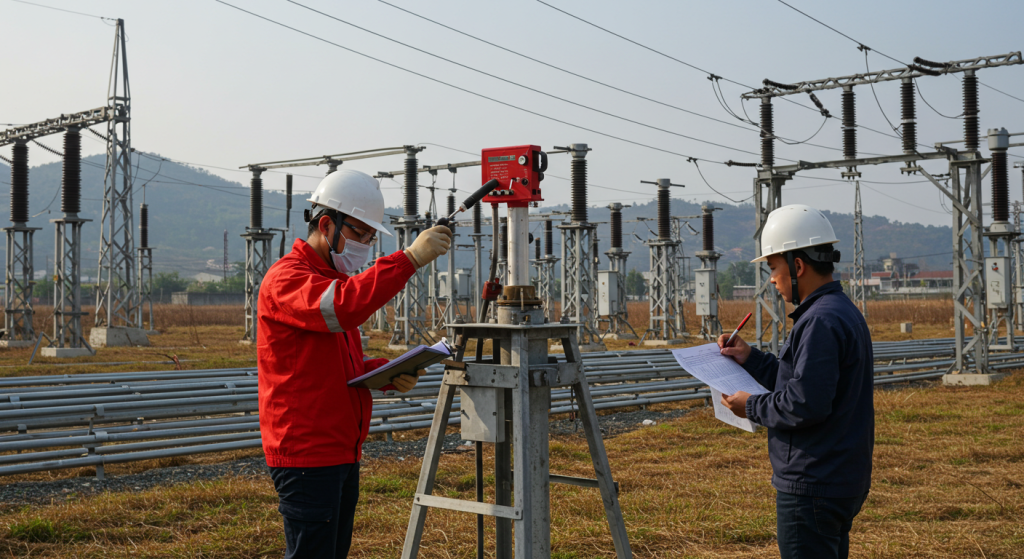

Ensuring the safety and longevity of power infrastructure requires rigorous third-party electrical testing. Not only does independent inspection verify compliance with NEA standards, but it also helps prevent costly failures and ensures long-term operational reliability. For Nepal’s power projects, these tests are essential, and here are five reasons why.
1. Early Detection of Installation Errors
Firstly, third-party testing identifies deviations from design specifications before they escalate into costly failures. FAT (Factory Acceptance Testing) and SAT (Site Acceptance Testing) confirm equipment performance both in the factory and on-site. By catching potential issues early, engineers ensure compliance with NEA standards and reduce risks to personnel and equipment.
2. Ensures Mechanical Integrity
Additionally, torque verification and bolted connection inspections prevent structural failures under operational loads. Properly tested connections reduce downtime and prevent hazards caused by mechanical instability. Moreover, consistent verification ensures that any irregularities are addressed immediately, maintaining the integrity of the entire system.

3. Maintains Conductor Safety
Furthermore, stringing inspections verify conductor alignment, sag, and clearance. These checks prevent electrical faults and ensure safe operation under varying environmental conditions. For example, extreme weather or terrain variations can impact tension and alignment, making these inspections critical for long-term reliability.
4. Guarantees Compliance with Standards
Equally important, by following protocols such as IEEE 1202 standards, third-party testing ensures that all materials, installations, and procedures meet regulatory and safety requirements. Therefore, both personnel and infrastructure remain protected, and projects can achieve NEA-grade certification without unexpected setbacks.
5. Traceable Documentation for Accountability
Finally, accurate logs of inspections, tests, and approvals create a complete audit trail. Document traceability is essential for NEA compliance, future maintenance, and operational longevity. Consequently, any maintenance or upgrades can be conducted efficiently, with full visibility into the system’s history.
Conclusion
In conclusion, reliable third-party electrical testing forms the backbone of NEA-grade infrastructure. Tebina Construction integrates independent inspections, rigorous field testing, and detailed documentation in every project. This approach ensures safe, compliant, and long-lasting power systems.
For related insights, explore:
- Transmission Tower Foundations in Nepal
- Substation Earthing Methods for Reliable Ground Resistance
- Mastering Dynamic Load Calculations for Safe and Reliable Pole Erection
For collaboration or inquiries, visit our website.


