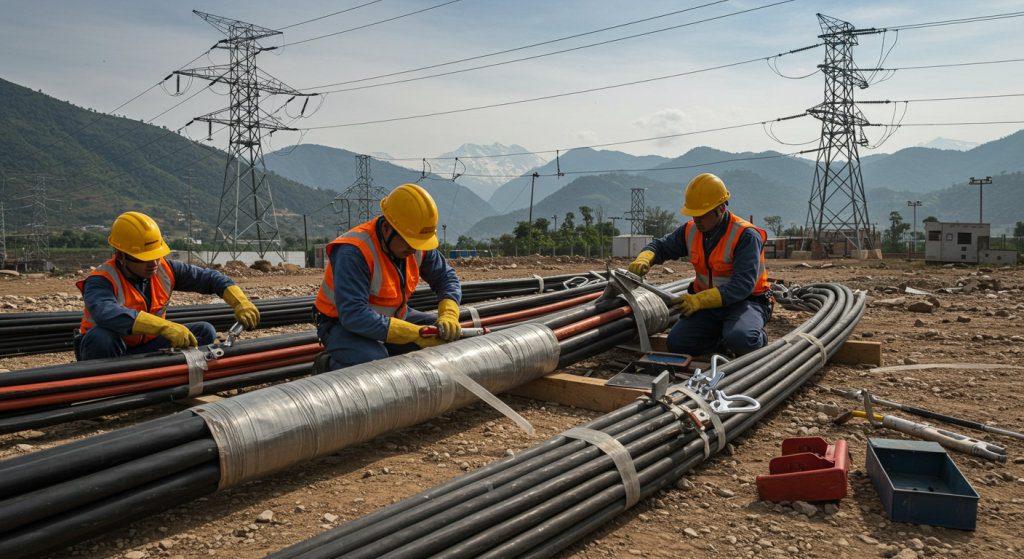

Reliable cable performance depends on how well terminations and joints are installed in the field. Cable termination failures often occur not because of poor materials but due to minor installation errors, moisture entry, and insufficient quality control during site work. When overlooked, these issues cause insulation breakdown, power interruptions, and expensive maintenance cycles.
Understanding How Termination Failures Develop
The weakest point in a power cable is often the termination or joint, where mechanical, electrical, and environmental stresses meet. Improper crimping, insufficient sealing, or contamination during installation can lead to partial discharges or tracking failures. Over time, these conditions deteriorate insulation and trigger complete breakdowns.
Moisture ingress is one of the most common causes. When joints are not properly sealed or when heat shrink materials are applied incorrectly, humidity penetrates the insulation, leading to corrosion and surface tracking. To prevent such deterioration, every termination should undergo visual inspection, continuity testing, and insulation resistance checks before energization.
The Role of Field Quality Control
Quality control in cable termination starts long before energization. It includes verifying conductor preparation, torque settings, and adherence to manufacturer instructions. Regular field supervision and test documentation ensure that each joint meets performance standards.
In Nepal, large-scale transmission and distribution projects follow the Nepal Electricity Authority (NEA) Installation Guidelines for cable testing and commissioning. These standards outline procedures for high-voltage terminations, ensuring resistance and leakage values stay within permissible limits.
Advanced diagnostic methods such as Very Low Frequency (VLF) testing and Partial Discharge (PD) analysis provide further assurance. These tests identify weak spots in the insulation system, allowing early intervention before operational failures occur.
Preventive Practices for Long-Term Reliability
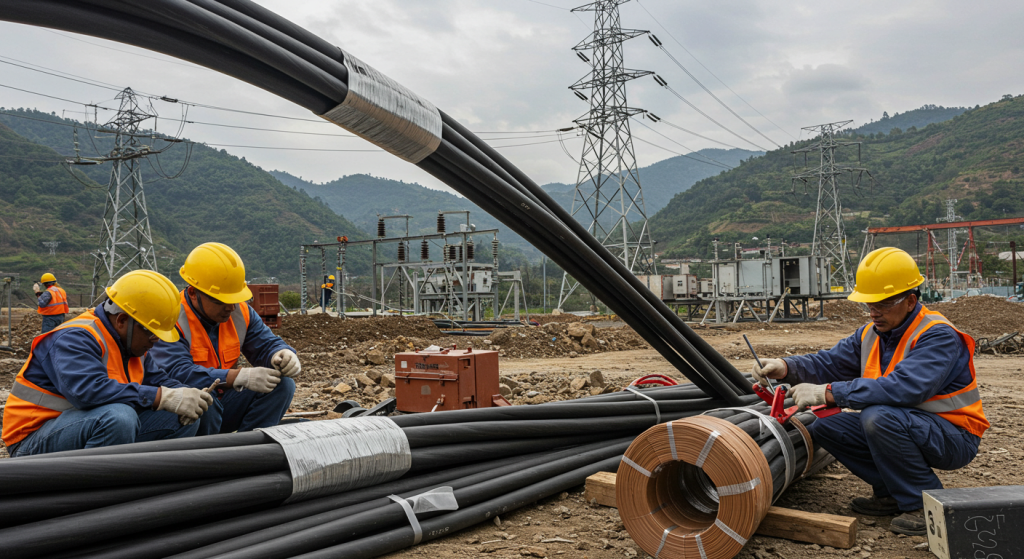
To minimize cable termination failures, contractors should maintain strict site hygiene, use approved jointing kits, and record temperature and humidity during installation. Technicians should follow torque and stripping lengths as specified by the manufacturer to prevent conductor damage.
Periodic maintenance inspections further reduce downtime by identifying early signs of corrosion or tracking at terminations.
When combined with field-level accountability and training, these practices ensure safe operation and minimal disruption to the power network.
Building Reliable Networks with Tebina Construction
At Tebina Construction, we apply rigorous inspection and testing methods to every power and transmission project. Our field teams focus on preventive quality control to ensure long-term system reliability.
Explore more technical insights on Substation Earthing Methods for Reliable Ground Resistance and Transmission Tower Foundations in Nepal.


